World Dance Organisation

WDO Education

Certificate of Teaching

Dance Teacher Level 1

For candidates

Download final handbook

Introduction

The Certificate of Teaching is a course of study and assessment developed by the Education Committee of the World Dance Organisation (WDO). The program aims to assist beginning teachers, whether amateur or professional, in developing the skills required to successfully pursue their teaching career.

As the first level in the WDO Teacher/Coach Development Program, it includes areas of knowledge and skills considered necessary for the successful education of dance teachers. This program is not intended to replace traditional teacher qualifications required for accreditation by other dance organisations, but rather to complement such qualifications.

Assessment Structure

The assessment lasts 1 hour and 15 minutes per dance style: Ballroom and Latin.

Practical Performance

  • Solo demonstration: dance 16 bars of each dance in both leader and follower roles, without music.
  • Counting while dancing: count 8 bars in slows and quicks where possible, and 8 bars in numbers.
  • Demonstrate accurate poise, alignment, footwork, timing, body movement and positioning.

Theoretical Knowledge

  • Answer five questions from the general question bank.
  • Answer five questions from the dance-specific question bank.
  • Give at least two precedes and follows to listed figures.

Terms candidates should be prepared to describe

Posture and poise; hold; body positions; alignment; amount of turn; footwork; CBM and CBMP; actions such as sway, swing, hip actions and weight transfer; time signature; tempo; musical accents; and timing.

Teacher's Etiquette

  • Wear appropriate clothing and shoes, maintain good personal hygiene, and be aware of others teaching in the same floor space.
  • Treat peers and pupils with respect, and maintain good timekeeping and punctuality.
  • Relate teaching methods and strategies to the student's age, physical and cognitive ability, preferred learning style, emotional readiness and maturity.
  • Balance motivation through praise and constructive feedback. Teachers are role models and should conduct the teaching process professionally.

Latin American Required Syllabus Figures

Rumba

  • Basic Movements (Closed, Open, In Place and Alternative)
  • New York
  • Spot Turns
  • Hand to Hand
  • Fan
  • Alemana
  • Hockey Stick
  • Shoulder to Shoulder
  • Opening Out
  • Cucarachas
  • Progressive Walks

Samba

  • Basic Movements
  • Whisks
  • Samba Walks
  • Rhythm Bounce
  • Volta Movements
  • Travelling Bota Fogo Forward
  • Criss Cross Bota Fogo
  • Travelling Bota Fogo Back
  • Bota Fogo to Promenade and Counter Promenade
  • Criss Cross Volta
  • Solo Spot Volta

Paso Doble

  • Sur Place
  • Basic Movement
  • Chasses to Right and Left
  • Drag
  • Deplacement (Attack)
  • Promenade Link
  • Promenade
  • Ecart
  • Huit
  • Separation
  • Sixteen

Jive

  • Basic in Place
  • Fallaway Rock
  • Fallaway Throwaway
  • Link
  • Change of Places Right to Left
  • Change of Places Left to Right
  • Change of Hands Behind Back
  • Hip Bump
  • American Spin
  • Stop and Go
  • Mooch

Cha Cha Cha

  • Basic Movements
  • New York
  • Spot Turns
  • Shoulder to Shoulder
  • Hand to Hand
  • Fan
  • Alemana
  • Hockey Stick
  • Three Cha Cha Chas
  • There and Back
  • Time Steps

Ballroom Required Syllabus Figures

Waltz

  • Closed Change (right foot and left foot commencing)
  • Natural Turn
  • Reverse Turn
  • Closed Impetus
  • Whisk
  • Chasse from Promenade Position
  • Natural Spin Turn

Quickstep

  • Quarter Turn
  • Natural Turn
  • Natural Turn with Hesitation
  • Natural Spin Turn
  • Progressive Chasse
  • Chasse Reverse Turn
  • Forward Lock
  • Change of Direction

Tango

  • Walk
  • Progressive Side Step
  • Progressive Link
  • Closed Promenade
  • Rock Turn
  • Open Reverse Turn
  • Back Corte

Slow Foxtrot

  • Feather Step
  • Reverse Turn
  • Feather Finish
  • Three Step
  • Natural Turn
  • Closed Impetus with Feather Finish
  • Weave
  • Change of Direction

Viennese Waltz

  • Change Step Forward
  • Change Step Back
  • Natural Turn
  • Reverse Turn

Question Banks and Study Resources

Precedes and Follows

The handbook contains the required precedes and follows for Rumba, Samba, Paso Doble, Jive, Cha Cha Cha, Waltz, Slow Foxtrot, Quickstep and Tango.

General Question Banks

Study weight transfer, Latin cross, walks and delayed walks, positions, connection and lead, promenade and counter promenade, time signatures, musical accents, tempo, rhythm, timing, hold, CBM, CBMP, sway and swing action.

Recommended Technique Books

ISTD Latin American Technique; IDTA; Walter Laird's Technique of Latin Dancing; ISTD The Ballroom Technique; ISTD The Viennese Waltz Technique; and Guy Howard's Technique of Ballroom Dancing.

Books can be purchased through DSI London.

Glossary

Alignment
The direction of the feet and body in relation to the line of dance.
CBM
The turning of the opposite side of the body in the direction of the moving leg, used to commence turns.
CBMP
A foot position where the moving foot is placed on or across the line of the supporting foot, in front or behind.
Chasse
A set of three steps in which the feet are closed or half-closed on the second step.
Hold
The position of the bodies in relationship to each other, including the arms and hands.
No Foot Rise
Rise through the legs and body, but not the feet.
Accent
A beat played with greater dominance than the other beats in the bar.
Tempo
The chosen speed at which beats occur, measured by the number of bars or beats per minute.
Time Signature
A numeric indication of meter: the upper numeral gives the beats in a bar and the lower numeral gives the note value of one beat.
Timing
The execution of actions to musical count and their placement within a time duration.
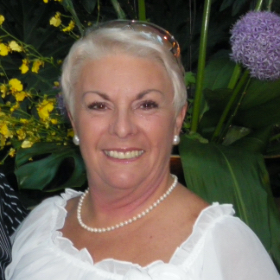
Lorna Lee

Contact Information

Lorna Lee

WDO assessor of education & certification

education@worlddanceorganisation.com Download final handbook